
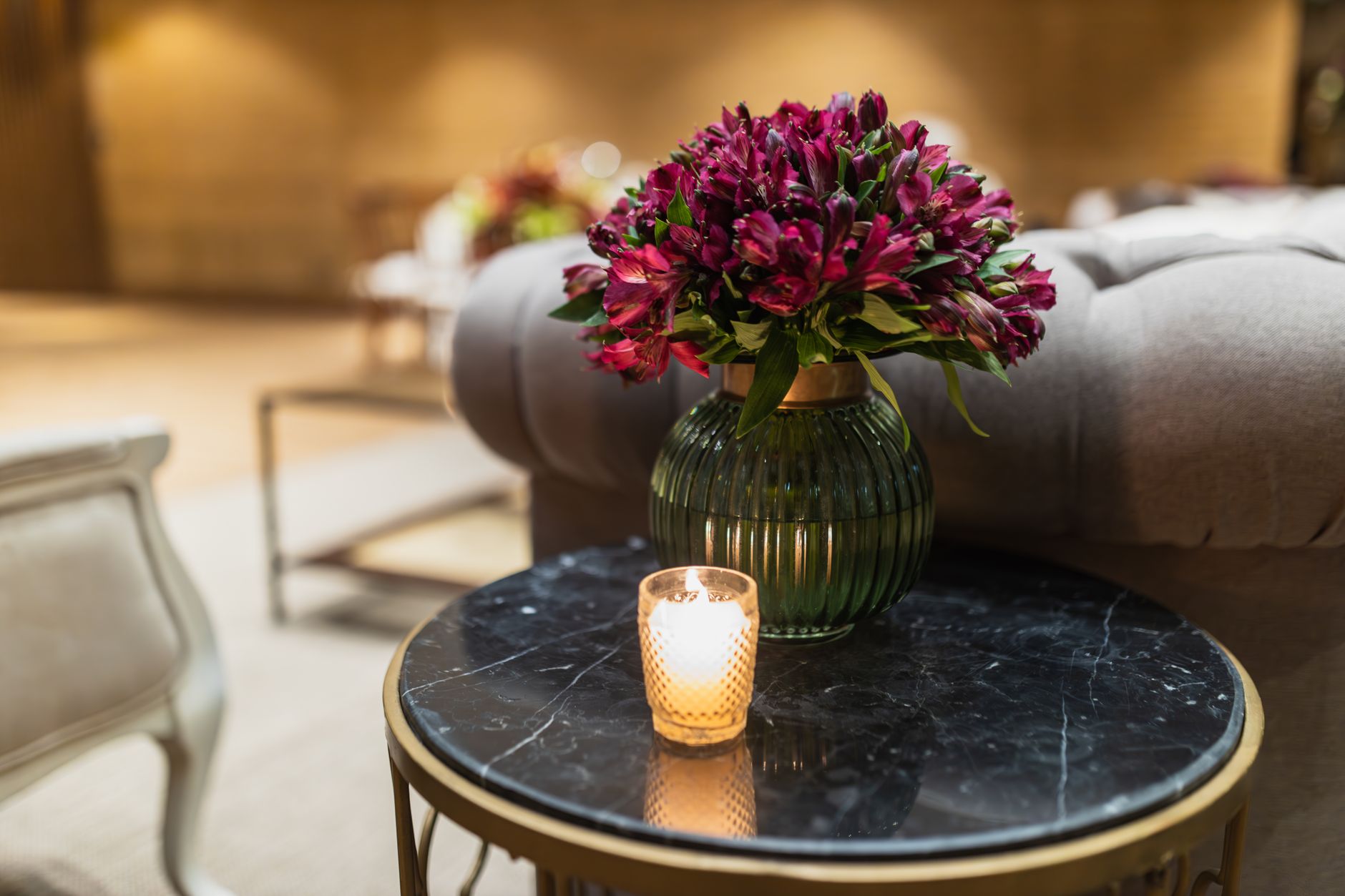
A bouquet that lasts a week and a half in October can look tired by day five in January. Nothing is wrong with the flowers. The difference is the room. From the first cold snap, our homes fill with forced air, radiators, space heaters and crackling fireplaces, and a vase of cut flowers sits right in the middle of it.
The good news is that most of the damage comes from a handful of habits you can change in a minute. Here is what university extension horticulturists say about it, and how we put it into practice.
What Warm, Moving Air Does to a Cut Flower
A cut stem has no roots. All its water has to travel up through the stem and out through the petals and leaves. Purdue Extension points out that warm or moving air pulls water out of flowers faster than the stems can take it up. A flower sitting in front of a heating vent is losing water at a high rate while the stem is working as hard as it can to replace it, and eventually the stem loses.
Winter air indoors also tends to be drier than summer air, because heating warms the air without adding moisture. We would not put a number on it, since every house is different, but you have probably felt it in your own skin and lips. Flowers feel it too.
University of Illinois Extension and Kansas State University both recommend a cool spot for cut flowers, roughly 65 to 72°F, away from sun, heating and cooling vents, ceiling fans and radiators. A room that is comfortable for a sweater is comfortable for a bouquet.
Where to Put the Vase (and Where Not To)
Think about the places a winter bouquet usually ends up, and the better places nearby.
- On top of the television or a warm appliance gives off steady heat from below. Move it to a side table.
- Above or beside a heating register blows dry air across the blooms all day. Shift it a few feet and the difference shows within a day or two.
- On a sunny windowsill looks lovely and cooks the flowers. In winter, the cold glass can also chill them overnight, so a spot in bright, indirect light is kinder.
- Next to the fruit bowl is a quiet problem. Apples, bananas and other fresh produce give off ethylene gas, which can shorten the life of many cut flowers. UC Agriculture and Natural Resources notes it can do so drastically.
- In a cool dining room, a hallway table or a bedroom dresser are all better homes than the warmest room in the house.
Where a bouquet sits for dinner parties and holiday gatherings, you can move it back to a cooler spot afterward. University of California extension materials suggest that many cut flowers can spend the night in an unheated room or garage, or even the refrigerator (never the freezer), when they are not on display. Tropical flowers such as orchids and anthurium are the exception and should stay no cooler than about 50°F.
The Five-Minute Routine That Does the Most
- Change the water every day or two, and wash the vase with soap and water between changes. Purdue Extension explains that bacteria multiply in the water and clog the stems, which causes wilting.
- Make a fresh cut each time you change the water. Trim a little off the bottom at an angle. University of Illinois Extension notes that this keeps the stem open and increases the surface that takes in water.
- Keep the cut end under water. If a stem dries out, air can enter and block the flow, which is the usual cause of a rose with a floppy neck.
- Strip any leaves that would sit below the waterline, since they rot and cloud the water.
- Add the flower food packet if there is one, and top the vase up as the level drops.
Our longer guide to keeping fresh cut flowers lasting longer goes through the full routine. This post is about the winter twists on it.
Some Winter Flowers Handle Heat Better Than Others
Every cut flower has a limit, but some are plainly tougher indoors in cold months. Carnations, chrysanthemums, alstroemeria and orchids are known for lasting, while delicate blooms such as tulips and ranunculus tend to open fast in a warm room. If your house runs warm, choose sturdier flowers and keep the delicate ones for a cooler room or a short, special evening.
Greens and evergreens, such as pine, cedar and holly, last well and give the arrangement some body. They also appear in our guide to holiday flowers and greens, where we go over poinsettias, amaryllis, paperwhites and holly.
Potted plants have winter troubles of their own. Penn State Extension advises keeping poinsettias away from drafts and heating vents, and away from rapid temperature changes. A poinsettia in a cold doorway on a winter night will drop leaves as quickly as one sitting over a heater.
When a Bouquet Arrives in Cold Weather
Flowers delivered in winter spend time in a vehicle and on a cold porch before they reach a vase. When yours arrives, bring it inside, unwrap it and give it a fresh cut and clean water right away. If the weather is freezing, keep the box in a cool room instead of putting it near a vent. Let the flowers settle into the room before they get the full heat treatment.
Sending flowers to someone else this season? A short note on the card, such as “keep me away from the heater,” is a friendly reminder. You can also pick a plant, which often copes better with a heated house than a cut bouquet does. Our plants and gardens have plenty of ideas.
Quick Questions
Why do my flowers die faster in winter?
Heating makes indoor air warm and dry, and warm, moving air pulls water out of flowers faster than the stems can replace it. Vents, radiators, sunny windows and fruit bowls add to the problem.
What temperature do cut flowers like?
University extension sources recommend about 65 to 72°F for most cut flowers, away from direct heat and drafts.
Can I put flowers in the refrigerator overnight?
University of California extension materials say you can keep many cut flowers in a cool room, a garage or the refrigerator overnight, but never the freezer. Tropical flowers want to stay above about 50°F.
Should I mist my flowers?
Our sources focus on water in the vase, clean containers, fresh cuts and cool placement. Start there.