
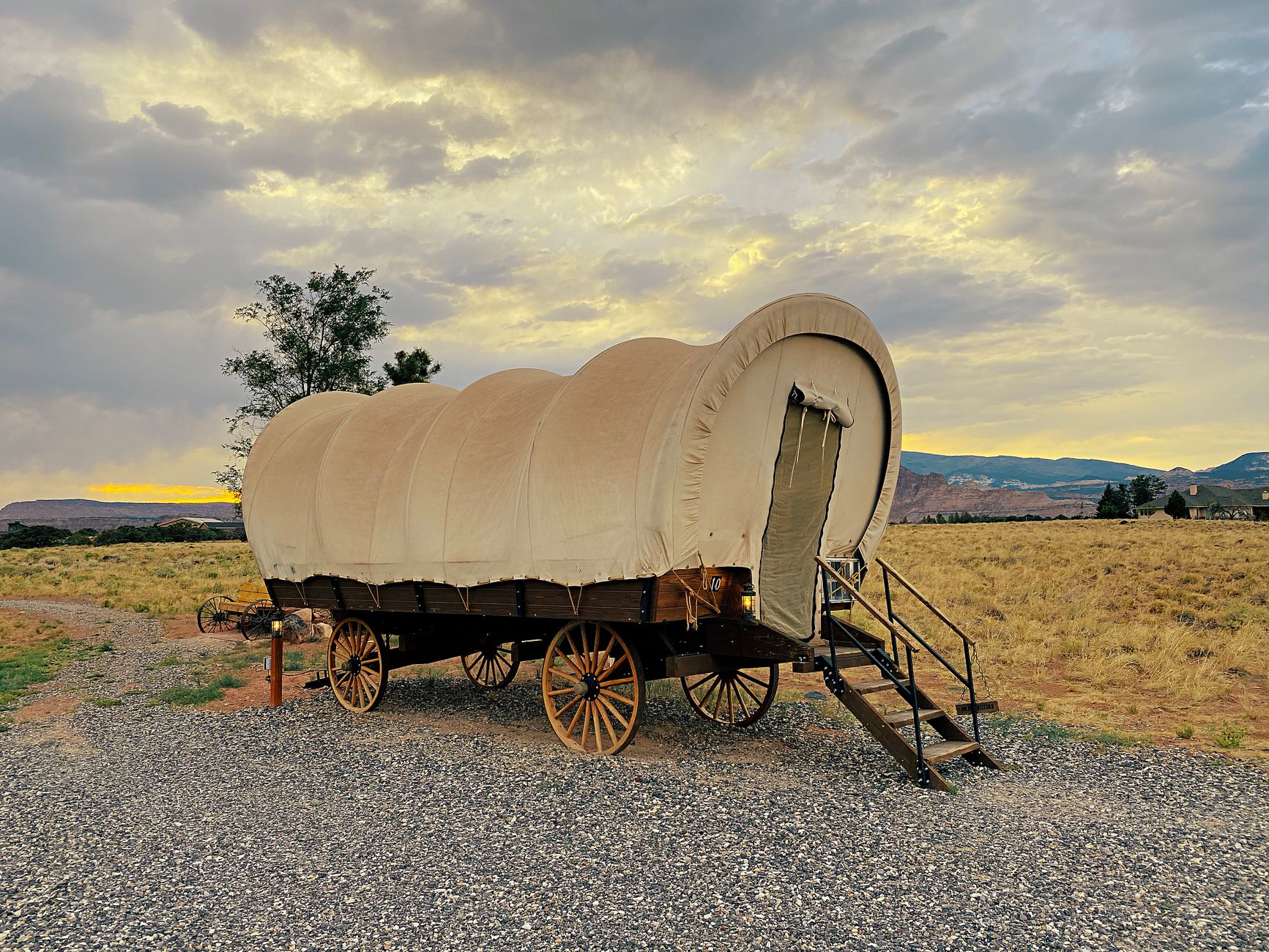
Every Oregon schoolchild learns about the Oregon Trail, and the Portland area is where the story ends. Here is a short look at the trail and where it led, followed by a few flower ideas for anyone who wants to bring a little pioneer spirit to a table.
A 2,000-Mile Journey
The Oregon Trail was a wagon route of about 2,170 miles that connected the Missouri River to the valleys of Oregon. The first migrant wagon train organized in Independence, Missouri, in 1836 had a trail cleared as far as Fort Hall in present-day Idaho, and wagon trails were pushed farther west until they reached the Willamette Valley. In 1843, a group known as the Great Migration set out, an estimated 700 to 1,000 emigrants bound for Oregon, and settlers kept arriving in the Willamette Valley through the 1840s.
The End of the Trail Is Near Portland
The trail’s nominal end was Oregon City, at the time the proposed capital of the Oregon Territory, just south of what is now Portland. Many settlers arrived there before spreading out across the valley. Wagons reaching The Dalles on the Columbia River were stopped by the lack of a road around Mount Hood, until the Barlow Road was completed in 1846. It was a rough but passable toll road, at $5 per wagon, that carved through the forest around the mountain. Oregon City is also home to the End of the Oregon Trail Interpretive Center, a good place to learn the story.
A Pioneer-Style Table
If the history inspires you, here are a few easy ways to bring it to the table:
- Wildflowers and loose garden flowers in a plain jar or a tin cup
- A bunch of fresh herbs, such as rosemary, sage and thyme, tied with twine
- Wheat or grasses mixed with a few seasonal flowers
- Simple muslin or checked cloth under the vase
- A single pitcher of flowers on a sideboard, instead of a big centerpiece
- Enamel and stoneware, with no fancy vases
The idea is not to copy anything, only to keep it modest and handmade. If you would rather leave the arranging to someone else, we can build a simple, loose, garden-style bouquet. Our guide to why Portland is the City of Roses shows how the area’s flower story began.